Quiz-summary
0 of 30 questions completed
Questions:
- 1
- 2
- 3
- 4
- 5
- 6
- 7
- 8
- 9
- 10
- 11
- 12
- 13
- 14
- 15
- 16
- 17
- 18
- 19
- 20
- 21
- 22
- 23
- 24
- 25
- 26
- 27
- 28
- 29
- 30
Information
Topics:
Firearm Maintenance and Care:
Cleaning and maintenance procedures for handguns.
Identification of common firearm problems and how to troubleshoot them.
Proper storage of firearms and ammunition.
Use of Force and Conflict Resolution:
Understanding of de-escalation techniques and conflict resolution strategies.
Recognizing and responding to potentially dangerous situations.
Legal and ethical considerations when using force for self-defense.
Communication skills in high-stress situations.
State-specific Laws and Procedures:
Familiarity with the particular requirements and procedures for obtaining a CCW permit in the state.
Knowledge of any additional training or certification requirements.
Understanding of reciprocity agreements with other states regarding CCW permits.
Written Exam:
Multiple-choice questions covering legal, safety, and practical aspects of concealed carry.
Questions may test knowledge of state laws, firearm operation, safety protocols, and conflict resolution scenarios.
Practical Demonstration:
Demonstration of safe handling and operation of a firearm.
Proficiency in shooting and marksmanship skills.
Application of legal principles in simulated scenarios.
You have already completed the quiz before. Hence you can not start it again.
Quiz is loading...
You must sign in or sign up to start the quiz.
You have to finish following quiz, to start this quiz:
Results
0 of 30 questions answered correctly
Your time:
Time has elapsed
You have reached 0 of 0 points, (0)
Categories
- Not categorized 0%
- 1
- 2
- 3
- 4
- 5
- 6
- 7
- 8
- 9
- 10
- 11
- 12
- 13
- 14
- 15
- 16
- 17
- 18
- 19
- 20
- 21
- 22
- 23
- 24
- 25
- 26
- 27
- 28
- 29
- 30
- Answered
- Review
-
Question 1 of 30
1. Question
Mr. Kim, a Hawaii resident, is attending a public event where firearms are prohibited. Despite the prohibition, Mr. Kim decides to carry a concealed firearm for personal protection. What legal consequences could Mr. Kim face for violating the prohibition on carrying firearms at the event?
Correct
Carrying a concealed firearm in a prohibited area, such as a public event where firearms are banned, constitutes a violation of firearm laws and regulations. As a result, individuals like Mr. Kim may face various legal consequences for unlawfully possessing a firearm in a prohibited area. These consequences may include criminal charges for violating firearm laws, civil liability for any injuries or damages resulting from the unauthorized possession of a firearm, and administrative penalties such as the revocation of concealed carry permits and loss of firearm ownership privileges. Therefore, individuals should adhere to applicable laws and regulations regarding the possession and carrying of firearms to avoid legal repercussions and ensure public safety.
Incorrect
Carrying a concealed firearm in a prohibited area, such as a public event where firearms are banned, constitutes a violation of firearm laws and regulations. As a result, individuals like Mr. Kim may face various legal consequences for unlawfully possessing a firearm in a prohibited area. These consequences may include criminal charges for violating firearm laws, civil liability for any injuries or damages resulting from the unauthorized possession of a firearm, and administrative penalties such as the revocation of concealed carry permits and loss of firearm ownership privileges. Therefore, individuals should adhere to applicable laws and regulations regarding the possession and carrying of firearms to avoid legal repercussions and ensure public safety.
-
Question 2 of 30
2. Question
Ms. Lopez, a resident of Hawaii, is at a shopping mall when she hears screams and sees people running in panic. As she rounds a corner, she sees an individual brandishing a firearm and threatening others. What should Ms. Lopez do in this active shooter situation to ensure her safety and the safety of others?
Correct
In an active shooter situation, Ms. Lopez’s priority should be to ensure her safety and the safety of others around her. Taking cover behind a solid object, such as a wall or store display, can provide protection from gunfire and increase Ms. Lopez’s chances of survival. Remaining quiet and avoiding drawing attention to herself can help Ms. Lopez avoid becoming a target for the shooter. Yelling loudly or attempting to confront the shooter directly may escalate the situation and increase the risk of harm. Instead, Ms. Lopez should stay low, keep quiet, and wait for an opportunity to escape or seek assistance from law enforcement. By following these safety protocols, Ms. Lopez can increase her chances of surviving an active shooter situation.
Incorrect
In an active shooter situation, Ms. Lopez’s priority should be to ensure her safety and the safety of others around her. Taking cover behind a solid object, such as a wall or store display, can provide protection from gunfire and increase Ms. Lopez’s chances of survival. Remaining quiet and avoiding drawing attention to herself can help Ms. Lopez avoid becoming a target for the shooter. Yelling loudly or attempting to confront the shooter directly may escalate the situation and increase the risk of harm. Instead, Ms. Lopez should stay low, keep quiet, and wait for an opportunity to escape or seek assistance from law enforcement. By following these safety protocols, Ms. Lopez can increase her chances of surviving an active shooter situation.
-
Question 3 of 30
3. Question
Mr. Chang, a Hawaii resident, is at a restaurant when he notices an individual acting erratically and making threatening gestures towards other patrons. Concerned for the safety of himself and others, Mr. Chang decides to intervene. What should Mr. Chang consider when intervening in this potentially dangerous situation?
Correct
When intervening in a potentially dangerous situation, such as when an individual is acting erratically and making threats, Mr. Chang should prioritize personal safety and the safety of others. This means assessing the level of risk posed by the individual’s behavior and considering the potential for escalation. Mr. Chang should use verbal de-escalation techniques to defuse the situation and calm the individual down, avoiding physical confrontation whenever possible. If the situation continues to escalate or poses an immediate threat to himself or others, Mr. Chang should seek assistance from restaurant staff or other patrons to intervene collectively. However, Mr. Chang should prioritize personal safety and only resort to physical confrontation as a last resort to protect himself or others from harm. By taking these precautions, Mr. Chang can effectively intervene in the situation while minimizing the risk of escalation and ensuring the safety of everyone involved.
Incorrect
When intervening in a potentially dangerous situation, such as when an individual is acting erratically and making threats, Mr. Chang should prioritize personal safety and the safety of others. This means assessing the level of risk posed by the individual’s behavior and considering the potential for escalation. Mr. Chang should use verbal de-escalation techniques to defuse the situation and calm the individual down, avoiding physical confrontation whenever possible. If the situation continues to escalate or poses an immediate threat to himself or others, Mr. Chang should seek assistance from restaurant staff or other patrons to intervene collectively. However, Mr. Chang should prioritize personal safety and only resort to physical confrontation as a last resort to protect himself or others from harm. By taking these precautions, Mr. Chang can effectively intervene in the situation while minimizing the risk of escalation and ensuring the safety of everyone involved.
-
Question 4 of 30
4. Question
Ms. Wong, a resident of Hawaii, is walking alone at night when she notices someone following her. Concerned for her safety, what steps should Ms. Wong take to mitigate the potential threat?
Correct
When faced with the situation of being followed and feeling unsafe, Ms. Wong should prioritize her safety by seeking help and removing herself from the vulnerable situation. Entering a well-lit public area or building where she can find other people and potentially seek assistance from authorities is the safest course of action. Confronting the individual or pretending to be on the phone may escalate the situation and put Ms. Wong at further risk. Continuing to walk briskly without addressing the situation could also increase the danger. Therefore, seeking refuge in a public area where she can find assistance is the most prudent action for Ms. Wong to take.
Incorrect
When faced with the situation of being followed and feeling unsafe, Ms. Wong should prioritize her safety by seeking help and removing herself from the vulnerable situation. Entering a well-lit public area or building where she can find other people and potentially seek assistance from authorities is the safest course of action. Confronting the individual or pretending to be on the phone may escalate the situation and put Ms. Wong at further risk. Continuing to walk briskly without addressing the situation could also increase the danger. Therefore, seeking refuge in a public area where she can find assistance is the most prudent action for Ms. Wong to take.
-
Question 5 of 30
5. Question
Mr. Garcia, a Hawaii resident, witnesses a verbal altercation escalating into a physical fight between two individuals in a public park. What should Mr. Garcia do to intervene and ensure the safety of those involved?
Correct
When witnessing a physical altercation, Mr. Garcia’s priority should be to ensure the safety of those involved while minimizing the risk to himself. Calling emergency services immediately to report the incident and request police assistance is the safest and most effective course of action. Attempting to physically intervene could escalate the situation and put Mr. Garcia and others at risk of harm. Yelling to attract the attention of bystanders may not effectively de-escalate the altercation and could lead to further chaos. While documenting the incident with his phone may be useful for providing information to law enforcement, Mr. Garcia should prioritize contacting emergency services to ensure a swift response from trained professionals.
Incorrect
When witnessing a physical altercation, Mr. Garcia’s priority should be to ensure the safety of those involved while minimizing the risk to himself. Calling emergency services immediately to report the incident and request police assistance is the safest and most effective course of action. Attempting to physically intervene could escalate the situation and put Mr. Garcia and others at risk of harm. Yelling to attract the attention of bystanders may not effectively de-escalate the altercation and could lead to further chaos. While documenting the incident with his phone may be useful for providing information to law enforcement, Mr. Garcia should prioritize contacting emergency services to ensure a swift response from trained professionals.
-
Question 6 of 30
6. Question
Ms. Martinez, a Hawaii resident, encounters a suspicious individual loitering near her vehicle in a parking lot. What should Ms. Martinez do to ensure her safety in this potentially threatening situation?
Correct
When encountering a suspicious individual near her vehicle, Ms. Martinez should prioritize her safety by avoiding direct confrontation and assessing the situation from a safe distance. Retreating to a safe distance allows Ms. Martinez to observe the individual’s behavior without escalating the situation or putting herself at risk. Approaching the individual could provoke a confrontation and increase the likelihood of danger. Similarly, confronting the individual loudly may draw unwanted attention and potentially escalate the situation. Entering her vehicle and driving away may be an option if Ms. Martinez feels immediately threatened, but observing from a safe distance first allows her to assess the situation and determine the best course of action. Therefore, retreating to a safe distance and observing the individual’s behavior is the most prudent action for Ms. Martinez to take in this situation.
Incorrect
When encountering a suspicious individual near her vehicle, Ms. Martinez should prioritize her safety by avoiding direct confrontation and assessing the situation from a safe distance. Retreating to a safe distance allows Ms. Martinez to observe the individual’s behavior without escalating the situation or putting herself at risk. Approaching the individual could provoke a confrontation and increase the likelihood of danger. Similarly, confronting the individual loudly may draw unwanted attention and potentially escalate the situation. Entering her vehicle and driving away may be an option if Ms. Martinez feels immediately threatened, but observing from a safe distance first allows her to assess the situation and determine the best course of action. Therefore, retreating to a safe distance and observing the individual’s behavior is the most prudent action for Ms. Martinez to take in this situation.
-
Question 7 of 30
7. Question
Mr. Johnson, a Hawaii resident, is considering purchasing a firearm for recreational shooting. Apart from firearm safety, what additional factors should Mr. Johnson consider before making his purchase?
Correct
When purchasing a firearm for recreational shooting, Mr. Johnson should consider various factors beyond firearm safety. Understanding the different types of firearms and their intended uses allows Mr. Johnson to select a firearm that aligns with his recreational shooting preferences, whether it be handguns for self-defense, rifles for hunting, or firearms for target shooting. Additionally, Mr. Johnson should assess his budget and consider the ongoing costs associated with firearm ownership, such as the price of ammunition, range fees for practice sessions, and maintenance expenses. Finally, researching local laws and regulations regarding firearm ownership and transportation is essential to ensure that Mr. Johnson remains in compliance with legal requirements and avoids potential legal consequences. By considering all of these factors comprehensively, Mr. Johnson can make an informed decision about purchasing a firearm for recreational shooting.
Incorrect
When purchasing a firearm for recreational shooting, Mr. Johnson should consider various factors beyond firearm safety. Understanding the different types of firearms and their intended uses allows Mr. Johnson to select a firearm that aligns with his recreational shooting preferences, whether it be handguns for self-defense, rifles for hunting, or firearms for target shooting. Additionally, Mr. Johnson should assess his budget and consider the ongoing costs associated with firearm ownership, such as the price of ammunition, range fees for practice sessions, and maintenance expenses. Finally, researching local laws and regulations regarding firearm ownership and transportation is essential to ensure that Mr. Johnson remains in compliance with legal requirements and avoids potential legal consequences. By considering all of these factors comprehensively, Mr. Johnson can make an informed decision about purchasing a firearm for recreational shooting.
-
Question 8 of 30
8. Question
Ms. Lee, a Hawaii resident, is interested in joining a shooting club to improve her marksmanship skills. What are some potential benefits of joining a shooting club for Ms. Lee?
Correct
Joining a shooting club can offer numerous benefits for individuals like Ms. Lee who are interested in improving their marksmanship skills. Access to professional instruction and guidance from experienced shooters allows Ms. Lee to receive personalized feedback and advice to enhance her shooting techniques and proficiency. Additionally, participating in organized shooting competitions and events provides Ms. Lee with opportunities to test her skills, set goals, and challenge herself in a supportive and competitive environment. Furthermore, membership privileges such as access to exclusive shooting ranges, equipment discounts, and social networking opportunities with other firearm enthusiasts enhance the overall shooting experience and sense of community within the club. By taking advantage of these benefits, Ms. Lee can improve her marksmanship skills and enjoy a rewarding and fulfilling experience as a member of a shooting club.
Incorrect
Joining a shooting club can offer numerous benefits for individuals like Ms. Lee who are interested in improving their marksmanship skills. Access to professional instruction and guidance from experienced shooters allows Ms. Lee to receive personalized feedback and advice to enhance her shooting techniques and proficiency. Additionally, participating in organized shooting competitions and events provides Ms. Lee with opportunities to test her skills, set goals, and challenge herself in a supportive and competitive environment. Furthermore, membership privileges such as access to exclusive shooting ranges, equipment discounts, and social networking opportunities with other firearm enthusiasts enhance the overall shooting experience and sense of community within the club. By taking advantage of these benefits, Ms. Lee can improve her marksmanship skills and enjoy a rewarding and fulfilling experience as a member of a shooting club.
-
Question 9 of 30
9. Question
Ms. Patel, a resident of Hawaii, is considering purchasing a firearm for recreational shooting. Apart from firearm safety, what additional factors should Ms. Patel consider before making her purchase?
Correct
When considering purchasing a firearm for recreational shooting, Ms. Patel should explore various factors beyond firearm safety to ensure a fulfilling shooting experience. While understanding local regulations and assessing personal capabilities are important, they are typically prerequisites for firearm ownership and may not directly influence Ms. Patel’s recreational shooting experience. Similarly, evaluating ergonomic features and customization options is relevant but may not outweigh the importance of consistent practice and skill development. Researching the availability of shooting ranges and training facilities is crucial as it directly impacts Ms. Patel’s ability to engage in regular practice sessions and improve her shooting skills over time. Therefore, this choice is the most pertinent factor for Ms. Patel to consider when planning her recreational shooting activities.
Incorrect
When considering purchasing a firearm for recreational shooting, Ms. Patel should explore various factors beyond firearm safety to ensure a fulfilling shooting experience. While understanding local regulations and assessing personal capabilities are important, they are typically prerequisites for firearm ownership and may not directly influence Ms. Patel’s recreational shooting experience. Similarly, evaluating ergonomic features and customization options is relevant but may not outweigh the importance of consistent practice and skill development. Researching the availability of shooting ranges and training facilities is crucial as it directly impacts Ms. Patel’s ability to engage in regular practice sessions and improve her shooting skills over time. Therefore, this choice is the most pertinent factor for Ms. Patel to consider when planning her recreational shooting activities.
-
Question 10 of 30
10. Question
Mr. Suzuki, a Hawaii resident, is interested in purchasing a firearm for home defense. In addition to firearm safety, what should Mr. Suzuki consider when selecting ammunition for his home defense firearm?
Correct
When selecting ammunition for home defense, Mr. Suzuki should prioritize compliance with local regulations and ordinances governing the use of specific ammunition types. While other choices are all relevant considerations for selecting ammunition, they primarily pertain to the performance and safety aspects of the ammunition itself. However, ensuring compliance with local regulations is essential as certain jurisdictions may have restrictions or prohibitions on the use of specific ammunition types, such as armor-piercing rounds or tracer ammunition, for home defense purposes. Therefore, Mr. Suzuki should review local regulations to ensure he selects ammunition that is legal and permissible for home defense use in his area.
Incorrect
When selecting ammunition for home defense, Mr. Suzuki should prioritize compliance with local regulations and ordinances governing the use of specific ammunition types. While other choices are all relevant considerations for selecting ammunition, they primarily pertain to the performance and safety aspects of the ammunition itself. However, ensuring compliance with local regulations is essential as certain jurisdictions may have restrictions or prohibitions on the use of specific ammunition types, such as armor-piercing rounds or tracer ammunition, for home defense purposes. Therefore, Mr. Suzuki should review local regulations to ensure he selects ammunition that is legal and permissible for home defense use in his area.
-
Question 11 of 30
11. Question
Ms. Chen, a Hawaii resident, is considering carrying a concealed firearm for personal protection. What factors should Ms. Chen consider when selecting appropriate clothing for concealed carry?
Correct
When selecting clothing for concealed carry, Ms. Chen should prioritize choosing garments that provide adequate coverage and structure to effectively conceal the firearm and prevent printing (the outline of the firearm being visible through the clothing). While other choices are all relevant considerations for selecting concealed carry clothing, ensuring effective concealment is paramount to maintain Ms. Chen’s privacy and security. Clothing with sufficient coverage and structure helps to obscure the contours of the firearm and minimize the risk of detection, enhancing Ms. Chen’s ability to carry discreetly in various settings. Therefore, Ms. Chen should prioritize choosing clothing that facilitates effective concealment of her firearm while considering additional factors such as comfort, accessibility, and material construction.
Incorrect
When selecting clothing for concealed carry, Ms. Chen should prioritize choosing garments that provide adequate coverage and structure to effectively conceal the firearm and prevent printing (the outline of the firearm being visible through the clothing). While other choices are all relevant considerations for selecting concealed carry clothing, ensuring effective concealment is paramount to maintain Ms. Chen’s privacy and security. Clothing with sufficient coverage and structure helps to obscure the contours of the firearm and minimize the risk of detection, enhancing Ms. Chen’s ability to carry discreetly in various settings. Therefore, Ms. Chen should prioritize choosing clothing that facilitates effective concealment of her firearm while considering additional factors such as comfort, accessibility, and material construction.
-
Question 12 of 30
12. Question
Mr. Nguyen, a Hawaii resident, is considering purchasing a firearm for recreational shooting and self-defense. What factors should Mr. Nguyen consider when deciding between a revolver and a semi-automatic pistol?
Correct
When deciding between a revolver and a semi-automatic pistol, Mr. Nguyen should prioritize assessing the reliability and simplicity of operation (choice a) to determine which firearm type aligns best with his preferences and skill level. While choices b), c), and d) are all relevant considerations for selecting a firearm, the reliability and ease of operation of each type are fundamental factors that can significantly impact Mr. Nguyen’s shooting experience and proficiency. Revolvers are known for their simplicity and robustness, making them suitable for shooters who prioritize reliability and ease of use. On the other hand, semi-automatic pistols offer advantages in terms of capacity and reload speed but may require more training and practice to master their operation effectively. Therefore, Mr. Nguyen should carefully assess his needs, preferences, and skill level when deciding between a revolver and a semi-automatic pistol for recreational shooting and self-defense.
Incorrect
When deciding between a revolver and a semi-automatic pistol, Mr. Nguyen should prioritize assessing the reliability and simplicity of operation (choice a) to determine which firearm type aligns best with his preferences and skill level. While choices b), c), and d) are all relevant considerations for selecting a firearm, the reliability and ease of operation of each type are fundamental factors that can significantly impact Mr. Nguyen’s shooting experience and proficiency. Revolvers are known for their simplicity and robustness, making them suitable for shooters who prioritize reliability and ease of use. On the other hand, semi-automatic pistols offer advantages in terms of capacity and reload speed but may require more training and practice to master their operation effectively. Therefore, Mr. Nguyen should carefully assess his needs, preferences, and skill level when deciding between a revolver and a semi-automatic pistol for recreational shooting and self-defense.
-
Question 13 of 30
13. Question
Ms. Kawamura, a Hawaii resident, is considering purchasing a firearm for recreational shooting and home defense. What factors should Ms. Kawamura consider when deciding between a pump-action shotgun and a semi-automatic shotgun?
Correct
When deciding between a pump-action shotgun and a semi-automatic shotgun, Ms. Kawamura should prioritize assessing the reliability and versatility of each shotgun type to determine which firearm best suits her intended uses and shooting preferences. While other choices are all relevant considerations for selecting a shotgun, the reliability and versatility of each type are fundamental factors that can significantly impact Ms. Kawamura’s shooting experience and effectiveness. Pump-action shotguns are known for their reliability and simplicity, making them suitable for a wide range of applications, including recreational shooting and home defense. Semi-automatic shotguns offer advantages in terms of faster follow-up shots and reduced recoil but may require more maintenance and have higher upfront costs. Therefore, Ms. Kawamura should carefully assess her needs, preferences, and shooting proficiency when deciding between a pump-action shotgun and a semi-automatic shotgun for recreational shooting and home defense.
Incorrect
When deciding between a pump-action shotgun and a semi-automatic shotgun, Ms. Kawamura should prioritize assessing the reliability and versatility of each shotgun type to determine which firearm best suits her intended uses and shooting preferences. While other choices are all relevant considerations for selecting a shotgun, the reliability and versatility of each type are fundamental factors that can significantly impact Ms. Kawamura’s shooting experience and effectiveness. Pump-action shotguns are known for their reliability and simplicity, making them suitable for a wide range of applications, including recreational shooting and home defense. Semi-automatic shotguns offer advantages in terms of faster follow-up shots and reduced recoil but may require more maintenance and have higher upfront costs. Therefore, Ms. Kawamura should carefully assess her needs, preferences, and shooting proficiency when deciding between a pump-action shotgun and a semi-automatic shotgun for recreational shooting and home defense.
-
Question 14 of 30
14. Question
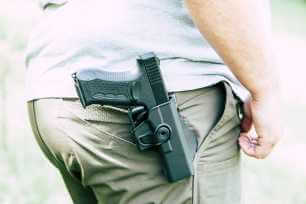
Mr. Kimura, a Hawaii resident, is interested in obtaining a concealed carry permit. What factors should Mr. Kimura consider when deciding on the method of carry for his concealed firearm?
Correct
When deciding on the method of carry for his concealed firearm, Mr. Kimura should prioritize assessing the level of concealment and comfort (choice a) provided by different carry methods to ensure the firearm remains discreetly hidden and accessible. While choices b), c), and d) are all relevant considerations for selecting a carry method, the level of concealment and comfort are fundamental factors that can significantly impact Mr. Kimura’s ability to carry discreetly and comfortably throughout the day. Various carry methods, such as inside-the-waistband (IWB), outside-the-waistband (OWB), ankle carry, or shoulder carry, offer different levels of concealment and comfort depending on factors such as body type, clothing choice, and firearm size. Therefore, Mr. Kimura should carefully assess his needs, preferences, and lifestyle when deciding on the method of carry for his concealed firearm to ensure optimal concealment, comfort, and accessibility.
Incorrect
When deciding on the method of carry for his concealed firearm, Mr. Kimura should prioritize assessing the level of concealment and comfort (choice a) provided by different carry methods to ensure the firearm remains discreetly hidden and accessible. While choices b), c), and d) are all relevant considerations for selecting a carry method, the level of concealment and comfort are fundamental factors that can significantly impact Mr. Kimura’s ability to carry discreetly and comfortably throughout the day. Various carry methods, such as inside-the-waistband (IWB), outside-the-waistband (OWB), ankle carry, or shoulder carry, offer different levels of concealment and comfort depending on factors such as body type, clothing choice, and firearm size. Therefore, Mr. Kimura should carefully assess his needs, preferences, and lifestyle when deciding on the method of carry for his concealed firearm to ensure optimal concealment, comfort, and accessibility.
-
Question 15 of 30
15. Question
Sarah, a resident of Hawaii, wants to apply for a concealed carry permit. She is aware that Hawaii has specific laws regarding firearms and concealed carry. Which of the following statements accurately reflects Hawaii’s requirements for concealed carry permits?
Correct
Hawaii is a “may-issue” state, meaning that local law enforcement has discretion in issuing concealed carry permits. Applicants must demonstrate a justifiable need for self-defense, such as being a victim of a violent crime or working in a high-risk profession. This requirement is outlined in Hawaii Revised Statutes § 134-9. Additionally, Hawaii does not allow non-residents to obtain concealed carry permits within the state.
Incorrect
Hawaii is a “may-issue” state, meaning that local law enforcement has discretion in issuing concealed carry permits. Applicants must demonstrate a justifiable need for self-defense, such as being a victim of a violent crime or working in a high-risk profession. This requirement is outlined in Hawaii Revised Statutes § 134-9. Additionally, Hawaii does not allow non-residents to obtain concealed carry permits within the state.
-
Question 16 of 30
16. Question
Mr. Rodriguez is a resident of Honolulu, Hawaii, who has recently obtained his concealed carry permit. While out running errands, he encounters a confrontation between two individuals in a parking lot. One of them brandishes a knife and threatens the other person. What action should Mr. Rodriguez take?
Correct
In such a situation, Mr. Rodriguez should prioritize his safety and the safety of others by contacting law enforcement immediately. Drawing a firearm without clear justification could escalate the situation and potentially lead to harm. Reporting the incident to 911 allows trained professionals to handle the situation and ensures that appropriate legal measures are taken. Hawaii law encourages individuals to avoid confrontation whenever possible and to rely on law enforcement for assistance in potentially dangerous situations.
Incorrect
In such a situation, Mr. Rodriguez should prioritize his safety and the safety of others by contacting law enforcement immediately. Drawing a firearm without clear justification could escalate the situation and potentially lead to harm. Reporting the incident to 911 allows trained professionals to handle the situation and ensures that appropriate legal measures are taken. Hawaii law encourages individuals to avoid confrontation whenever possible and to rely on law enforcement for assistance in potentially dangerous situations.
-
Question 17 of 30
17. Question
Tom, a resident of Maui, Hawaii, is considering applying for a concealed carry permit. He wants to familiarize himself with the laws and regulations governing concealed carry in Hawaii. Which of the following actions would disqualify Tom from obtaining a concealed carry permit in Hawaii?
Correct
Hawaii law prohibits individuals who have been convicted of certain offenses from obtaining a concealed carry permit. This includes misdemeanor offenses related to the use or possession of controlled substances within the past year, as outlined in Hawaii Revised Statutes § 134-7. Additionally, individuals with a history of mental illness may also be disqualified from obtaining a permit unless they can demonstrate that they are stable and not a danger to themselves or others. Minor traffic violations or owning firearms for recreational purposes do not necessarily disqualify an individual from obtaining a concealed carry permit in Hawaii.
Incorrect
Hawaii law prohibits individuals who have been convicted of certain offenses from obtaining a concealed carry permit. This includes misdemeanor offenses related to the use or possession of controlled substances within the past year, as outlined in Hawaii Revised Statutes § 134-7. Additionally, individuals with a history of mental illness may also be disqualified from obtaining a permit unless they can demonstrate that they are stable and not a danger to themselves or others. Minor traffic violations or owning firearms for recreational purposes do not necessarily disqualify an individual from obtaining a concealed carry permit in Hawaii.
-
Question 18 of 30
18. Question
Emily, a resident of Hawaii, recently obtained her concealed carry permit. She is planning to travel to a neighboring state for a vacation and wants to know if her Hawaii permit is valid there. What should Emily do to ensure she can legally carry her concealed firearm during her trip?
Correct
While some states may recognize concealed carry permits issued by other states, this is not always the case. Emily should research the reciprocity agreements between Hawaii and the state she plans to visit to determine if her permit is valid there. Each state has its own laws regarding concealed carry, and it’s essential to understand these laws before traveling with a firearm. Failure to comply with the laws of the visiting state could result in legal consequences. Emily should also familiarize herself with any additional requirements or restrictions imposed by the visiting state, such as prohibited locations or firearm storage regulations.
Incorrect
While some states may recognize concealed carry permits issued by other states, this is not always the case. Emily should research the reciprocity agreements between Hawaii and the state she plans to visit to determine if her permit is valid there. Each state has its own laws regarding concealed carry, and it’s essential to understand these laws before traveling with a firearm. Failure to comply with the laws of the visiting state could result in legal consequences. Emily should also familiarize herself with any additional requirements or restrictions imposed by the visiting state, such as prohibited locations or firearm storage regulations.
-
Question 19 of 30
19. Question
Mrs. Chang, a resident of Hawaii, regularly carries a concealed firearm for self-defense. While at a shopping mall, she notices a “No Weapons Allowed” sign posted at the entrance. What should Mrs. Chang do in response to the sign?
Correct
In Hawaii, property owners have the right to prohibit the carrying of firearms on their premises by posting signs indicating that weapons are not allowed. Mrs. Chang should respect the property owner’s wishes and comply with the posted signage. Failure to do so could result in legal consequences, including potential trespassing charges. Additionally, attempting to conceal a firearm in violation of posted signage may lead to security concerns and further complications. Mrs. Chang should secure her firearm in her vehicle or another designated location before entering the shopping mall to ensure compliance with the law and respect for private property rights.
Incorrect
In Hawaii, property owners have the right to prohibit the carrying of firearms on their premises by posting signs indicating that weapons are not allowed. Mrs. Chang should respect the property owner’s wishes and comply with the posted signage. Failure to do so could result in legal consequences, including potential trespassing charges. Additionally, attempting to conceal a firearm in violation of posted signage may lead to security concerns and further complications. Mrs. Chang should secure her firearm in her vehicle or another designated location before entering the shopping mall to ensure compliance with the law and respect for private property rights.
-
Question 20 of 30
20. Question
David, a resident of Hawaii, has obtained his concealed carry permit and regularly carries a firearm for self-defense. While walking his dog in his neighborhood, he encounters a group of individuals engaged in suspicious behavior near his property. Concerned for his safety, David decides to draw his firearm and confront the individuals. What action should David take in this situation?
Correct
In potentially dangerous situations, the primary concern should be to ensure personal safety and avoid escalating the conflict. Drawing a firearm without clear justification could lead to further confrontation and increase the risk of harm to all parties involved. David should prioritize his safety by retreating to a safe location and contacting law enforcement to report the suspicious activity. Law enforcement officers are trained to handle such situations and can investigate the matter further to ensure the safety of the community. Additionally, attempting to confront the individuals without proper training and support from law enforcement may put David at greater risk and could have legal repercussions. It’s essential to rely on law enforcement to address potential threats and maintain community safety.
Incorrect
In potentially dangerous situations, the primary concern should be to ensure personal safety and avoid escalating the conflict. Drawing a firearm without clear justification could lead to further confrontation and increase the risk of harm to all parties involved. David should prioritize his safety by retreating to a safe location and contacting law enforcement to report the suspicious activity. Law enforcement officers are trained to handle such situations and can investigate the matter further to ensure the safety of the community. Additionally, attempting to confront the individuals without proper training and support from law enforcement may put David at greater risk and could have legal repercussions. It’s essential to rely on law enforcement to address potential threats and maintain community safety.
-
Question 21 of 30
21. Question
Mark, a resident of Hawaii, has recently applied for a concealed carry permit. He is aware of the responsibility that comes with carrying a concealed firearm and wants to ensure he understands the legal implications fully. Which of the following situations would constitute a justifiable use of deadly force under Hawaii law?
Correct
In Hawaii, the use of deadly force is justifiable in self-defense or defense of others when faced with imminent danger of death or serious bodily injury. If Mark reasonably believes that his life is in danger or that he faces the risk of severe harm from an assailant armed with a knife, he may use deadly force to protect himself. This principle is outlined in Hawaii Revised Statutes § 703-304, which allows individuals to defend themselves or others from imminent threats of harm.
Incorrect
In Hawaii, the use of deadly force is justifiable in self-defense or defense of others when faced with imminent danger of death or serious bodily injury. If Mark reasonably believes that his life is in danger or that he faces the risk of severe harm from an assailant armed with a knife, he may use deadly force to protect himself. This principle is outlined in Hawaii Revised Statutes § 703-304, which allows individuals to defend themselves or others from imminent threats of harm.
-
Question 22 of 30
22. Question
Jessica, a resident of Hawaii, regularly carries a concealed firearm for personal protection. She is attending a public event at a local park when she notices a heated argument escalating into a physical altercation nearby. What should Jessica do in this situation?
Correct
Jessica’s priority should be to ensure the safety of herself and others while avoiding unnecessary confrontation. Drawing a firearm without clear justification could escalate the situation and potentially lead to harm. By contacting law enforcement and reporting the altercation, Jessica allows trained professionals to handle the situation and ensure the safety of everyone involved. It’s essential to rely on law enforcement to address conflicts and maintain public safety in such circumstances.
Incorrect
Jessica’s priority should be to ensure the safety of herself and others while avoiding unnecessary confrontation. Drawing a firearm without clear justification could escalate the situation and potentially lead to harm. By contacting law enforcement and reporting the altercation, Jessica allows trained professionals to handle the situation and ensure the safety of everyone involved. It’s essential to rely on law enforcement to address conflicts and maintain public safety in such circumstances.
-
Question 23 of 30
23. Question
Alex, a resident of Hawaii, has obtained his concealed carry permit and regularly carries a firearm for self-defense. He is planning to travel to another state for a business trip and wants to bring his concealed firearm with him. What should Alex do to ensure compliance with firearm laws during his trip?
Correct
While some states may recognize concealed carry permits issued by other states, this is not universally applicable. Alex should research the firearm laws of the destination state to determine if his Hawaii permit is recognized there. Each state has its own laws and regulations regarding concealed carry, and it’s essential to understand and comply with these laws to avoid legal consequences. Additionally, traveling with a firearm requires adherence to transportation and airport security regulations, which may vary depending on the mode of travel and destination. Therefore, thorough research and understanding of applicable laws are crucial for lawful firearm transportation and carry during travel.
Incorrect
While some states may recognize concealed carry permits issued by other states, this is not universally applicable. Alex should research the firearm laws of the destination state to determine if his Hawaii permit is recognized there. Each state has its own laws and regulations regarding concealed carry, and it’s essential to understand and comply with these laws to avoid legal consequences. Additionally, traveling with a firearm requires adherence to transportation and airport security regulations, which may vary depending on the mode of travel and destination. Therefore, thorough research and understanding of applicable laws are crucial for lawful firearm transportation and carry during travel.
-
Question 24 of 30
24. Question
Maria, a resident of Hawaii, is considering applying for a concealed carry permit. She wants to understand the legal requirements and restrictions associated with carrying a concealed firearm in public places. Which of the following locations is generally prohibited for carrying a concealed firearm under Hawaii law?
Correct
Under Hawaii law, carrying a concealed firearm is generally prohibited in certain locations, including government buildings during business hours. This prohibition is outlined in Hawaii Revised Statutes § 134-9, which restricts the possession of firearms in government buildings, such as courthouses, police stations, and other public facilities, during their normal operating hours. Individuals with concealed carry permits must adhere to these restrictions to avoid violating the law and facing legal consequences.
Incorrect
Under Hawaii law, carrying a concealed firearm is generally prohibited in certain locations, including government buildings during business hours. This prohibition is outlined in Hawaii Revised Statutes § 134-9, which restricts the possession of firearms in government buildings, such as courthouses, police stations, and other public facilities, during their normal operating hours. Individuals with concealed carry permits must adhere to these restrictions to avoid violating the law and facing legal consequences.
-
Question 25 of 30
25. Question
Brian, a resident of Hawaii, is involved in a road rage incident while driving home from work. The other driver becomes aggressive and confrontational, leading Brian to fear for his safety. What action should Brian take in response to the escalating situation?
Correct
In situations involving road rage or aggressive behavior, the priority should be to de-escalate the situation and ensure personal safety. Brian should avoid engaging in further confrontation with the other driver and instead choose to drive away from the scene to remove himself from the potential danger. Engaging in aggressive behavior or drawing a firearm without clear justification could escalate the situation and increase the risk of harm to all parties involved. It’s essential to prioritize safety and avoid unnecessary confrontation on the road.
Incorrect
In situations involving road rage or aggressive behavior, the priority should be to de-escalate the situation and ensure personal safety. Brian should avoid engaging in further confrontation with the other driver and instead choose to drive away from the scene to remove himself from the potential danger. Engaging in aggressive behavior or drawing a firearm without clear justification could escalate the situation and increase the risk of harm to all parties involved. It’s essential to prioritize safety and avoid unnecessary confrontation on the road.
-
Question 26 of 30
26. Question
Sarah, a resident of Hawaii, regularly carries a concealed firearm for self-defense purposes. One evening, while walking her dog in her neighborhood, she notices a suspicious individual loitering near her property. Concerned for her safety, Sarah decides to confront the individual to ascertain their intentions. What action should Sarah take in this situation?
Correct
When faced with a potentially dangerous situation, such as encountering a suspicious individual near her property, Sarah should prioritize her safety and avoid unnecessary confrontation. Instead of confronting the individual directly, Sarah should retreat to a safe location and contact law enforcement to report the suspicious activity. Law enforcement officers are trained to handle such situations and can investigate the matter further to ensure the safety of the community. Drawing a firearm or engaging in direct confrontation without clear justification could escalate the situation and increase the risk of harm. It’s essential to rely on law enforcement for assistance in such circumstances.
Incorrect
When faced with a potentially dangerous situation, such as encountering a suspicious individual near her property, Sarah should prioritize her safety and avoid unnecessary confrontation. Instead of confronting the individual directly, Sarah should retreat to a safe location and contact law enforcement to report the suspicious activity. Law enforcement officers are trained to handle such situations and can investigate the matter further to ensure the safety of the community. Drawing a firearm or engaging in direct confrontation without clear justification could escalate the situation and increase the risk of harm. It’s essential to rely on law enforcement for assistance in such circumstances.
-
Question 27 of 30
27. Question
James, a resident of Hawaii, has obtained his concealed carry permit and carries a firearm regularly. While dining at a restaurant, he notices a disturbance at a nearby table where two patrons are involved in a physical altercation. What action should James take in this situation?
Correct
James should prioritize safety and avoid escalating the situation by intervening directly. Instead, he should notify restaurant staff or management about the altercation and advise them to contact law enforcement. Restaurant staff are trained to handle such situations and can take appropriate measures to ensure the safety of patrons and employees. James should refrain from drawing his firearm unless absolutely necessary to protect himself or others from imminent harm, as drawing a firearm in a crowded public place could pose additional risks and legal implications.
Incorrect
James should prioritize safety and avoid escalating the situation by intervening directly. Instead, he should notify restaurant staff or management about the altercation and advise them to contact law enforcement. Restaurant staff are trained to handle such situations and can take appropriate measures to ensure the safety of patrons and employees. James should refrain from drawing his firearm unless absolutely necessary to protect himself or others from imminent harm, as drawing a firearm in a crowded public place could pose additional risks and legal implications.
-
Question 28 of 30
28. Question
Rebecca, a resident of Hawaii, is attending a public event at a local convention center. She is carrying a concealed firearm for personal protection. While entering the convention center, she notices a security checkpoint manned by armed guards. What should Rebecca do in this situation?
Correct
Daniel, a resident of Hawaii, regularly carries a concealed firearm for self-defense. One evening, he hears a loud noise outside his home and suspects that someone may be attempting to break in. What action should Daniel take in response to this situation?
Incorrect
Daniel, a resident of Hawaii, regularly carries a concealed firearm for self-defense. One evening, he hears a loud noise outside his home and suspects that someone may be attempting to break in. What action should Daniel take in response to this situation?
-
Question 29 of 30
29. Question
Daniel, a resident of Hawaii, regularly carries a concealed firearm for self-defense. One evening, he hears a loud noise outside his home and suspects that someone may be attempting to break in. What action should Daniel take in response to this situation?
Correct
Daniel’s priority should be to ensure his safety and the safety of others in the household by contacting law enforcement and reporting the suspicious activity. Confronting a potential intruder without knowing their intentions could escalate the situation and pose a risk to Daniel’s safety. By calling 911, Daniel allows trained professionals to handle the situation and ensure a swift response from law enforcement. It’s essential to avoid unnecessary confrontation and rely on law enforcement for assistance in such potentially dangerous situations.
Incorrect
Daniel’s priority should be to ensure his safety and the safety of others in the household by contacting law enforcement and reporting the suspicious activity. Confronting a potential intruder without knowing their intentions could escalate the situation and pose a risk to Daniel’s safety. By calling 911, Daniel allows trained professionals to handle the situation and ensure a swift response from law enforcement. It’s essential to avoid unnecessary confrontation and rely on law enforcement for assistance in such potentially dangerous situations.
-
Question 30 of 30
30. Question
Natalie, a resident of Hawaii, has recently obtained her concealed carry permit. She wants to understand the legal restrictions on carrying a concealed firearm in various locations. Which of the following places is generally prohibited for carrying a concealed firearm under Hawaii law?
Correct
Under Hawaii law, carrying a concealed firearm is generally prohibited on public transportation buses operated by the city. This prohibition is intended to ensure public safety and prevent potential conflicts or incidents involving firearms in confined spaces such as buses. Individuals with concealed carry permits should be aware of these restrictions and comply with the law when using public transportation services. Violating this prohibition could result in legal consequences and jeopardize the individual’s concealed carry permit status. It’s essential to understand and adhere to all applicable laws and regulations regarding the carrying of concealed firearms to avoid legal complications.
Incorrect
Under Hawaii law, carrying a concealed firearm is generally prohibited on public transportation buses operated by the city. This prohibition is intended to ensure public safety and prevent potential conflicts or incidents involving firearms in confined spaces such as buses. Individuals with concealed carry permits should be aware of these restrictions and comply with the law when using public transportation services. Violating this prohibition could result in legal consequences and jeopardize the individual’s concealed carry permit status. It’s essential to understand and adhere to all applicable laws and regulations regarding the carrying of concealed firearms to avoid legal complications.