Quiz-summary
0 of 30 questions completed
Questions:
- 1
- 2
- 3
- 4
- 5
- 6
- 7
- 8
- 9
- 10
- 11
- 12
- 13
- 14
- 15
- 16
- 17
- 18
- 19
- 20
- 21
- 22
- 23
- 24
- 25
- 26
- 27
- 28
- 29
- 30
Information
State of Missouri Firearms Handling and Shooting Proficiency, Basic firearm operation, including loading, unloading, and clearing malfunctions.
You have already completed the quiz before. Hence you can not start it again.
Quiz is loading...
You must sign in or sign up to start the quiz.
You have to finish following quiz, to start this quiz:
Results
0 of 30 questions answered correctly
Your time:
Time has elapsed
You have reached 0 of 0 points, (0)
Categories
- Not categorized 0%
- 1
- 2
- 3
- 4
- 5
- 6
- 7
- 8
- 9
- 10
- 11
- 12
- 13
- 14
- 15
- 16
- 17
- 18
- 19
- 20
- 21
- 22
- 23
- 24
- 25
- 26
- 27
- 28
- 29
- 30
- Answered
- Review
-
Question 1 of 30
1. Question
When can a person legally use deadly force in self-defense in the state of Missouri?
Correct
In Missouri, the use of deadly force in self-defense is governed by the Castle Doctrine and the principle of Stand Your Ground. According to Missouri Revised Statutes § 563.031, a person has the right to use force, including deadly force, in defense of themselves or others if they reasonably believe that such force is necessary to protect against imminent threat of death or great bodily harm. This applies not only in the person’s dwelling or residence but also in any other location where they have a legal right to be.
Incorrect
In Missouri, the use of deadly force in self-defense is governed by the Castle Doctrine and the principle of Stand Your Ground. According to Missouri Revised Statutes § 563.031, a person has the right to use force, including deadly force, in defense of themselves or others if they reasonably believe that such force is necessary to protect against imminent threat of death or great bodily harm. This applies not only in the person’s dwelling or residence but also in any other location where they have a legal right to be.
-
Question 2 of 30
2. Question
Mr. Anderson is walking to his car late at night when he notices someone approaching him aggressively with a knife. What should Mr. Anderson do?
Correct
Mr. Anderson should first assess the situation to determine if he is facing an imminent threat of death or great bodily harm. If he reasonably believes that his life is in danger, he may use his firearm in self-defense, as allowed by Missouri law. However, he should always consider other options such as de-escalation or retreat if possible, before resorting to the use of deadly force.
Incorrect
Mr. Anderson should first assess the situation to determine if he is facing an imminent threat of death or great bodily harm. If he reasonably believes that his life is in danger, he may use his firearm in self-defense, as allowed by Missouri law. However, he should always consider other options such as de-escalation or retreat if possible, before resorting to the use of deadly force.
-
Question 3 of 30
3. Question
Which of the following is a safe handling practice when carrying a concealed firearm in Missouri?
Correct
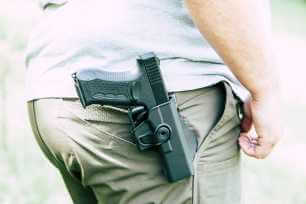
In Missouri, it is essential to safely handle and carry a concealed firearm. One of the safest practices is to carry the firearm in a concealed holster that completely covers the trigger guard. This helps prevent accidental discharge and ensures that the firearm is secure and easily accessible if needed for self-defense.
Incorrect
In Missouri, it is essential to safely handle and carry a concealed firearm. One of the safest practices is to carry the firearm in a concealed holster that completely covers the trigger guard. This helps prevent accidental discharge and ensures that the firearm is secure and easily accessible if needed for self-defense.
-
Question 4 of 30
4. Question
What should a concealed carry permit holder do if they are pulled over by law enforcement in Missouri while carrying a firearm?
Correct
Missouri law does not explicitly require individuals to inform law enforcement that they are carrying a concealed firearm during a routine traffic stop. However, it is advisable for permit holders to keep their hands visible on the steering wheel and follow the officer’s instructions carefully. If the officer asks if there are any weapons in the vehicle, the permit holder should truthfully disclose the presence of the firearm.
Incorrect
Missouri law does not explicitly require individuals to inform law enforcement that they are carrying a concealed firearm during a routine traffic stop. However, it is advisable for permit holders to keep their hands visible on the steering wheel and follow the officer’s instructions carefully. If the officer asks if there are any weapons in the vehicle, the permit holder should truthfully disclose the presence of the firearm.
-
Question 5 of 30
5. Question
Which of the following actions is considered proper firearm handling during a shooting proficiency test in Missouri?
Correct
During a shooting proficiency test in Missouri, it is crucial to adhere to safe firearm handling practices. This includes maintaining awareness of the target and beyond to ensure that there is no risk of unintentional harm to bystanders or property. Additionally, proper aiming, trigger discipline (keeping the finger off the trigger until ready to shoot), and following all safety rules are essential for successful completion of the test and safe firearm operation.
Incorrect
During a shooting proficiency test in Missouri, it is crucial to adhere to safe firearm handling practices. This includes maintaining awareness of the target and beyond to ensure that there is no risk of unintentional harm to bystanders or property. Additionally, proper aiming, trigger discipline (keeping the finger off the trigger until ready to shoot), and following all safety rules are essential for successful completion of the test and safe firearm operation.
-
Question 6 of 30
6. Question
Which of the following situations would justify the use of deadly force in defense of property in Missouri?
Correct
In Missouri, the use of deadly force in defense of property is generally not justified unless the property owner reasonably believes that such force is necessary to prevent a forcible felony, such as burglary or arson, or to protect against imminent threat of death or great bodily harm. Therefore, only when an individual is attempting to forcibly enter an occupied home, posing a threat to the occupants’ safety, would the use of deadly force be legally justified.
Incorrect
In Missouri, the use of deadly force in defense of property is generally not justified unless the property owner reasonably believes that such force is necessary to prevent a forcible felony, such as burglary or arson, or to protect against imminent threat of death or great bodily harm. Therefore, only when an individual is attempting to forcibly enter an occupied home, posing a threat to the occupants’ safety, would the use of deadly force be legally justified.
-
Question 7 of 30
7. Question
What is the legal requirement for obtaining a concealed carry permit in Missouri?
Correct
In Missouri, individuals who wish to obtain a concealed carry permit must complete a firearms safety course approved by the Missouri Department of Public Safety. This course covers essential topics such as firearm safety, basic firearm operation, Missouri firearms laws, and shooting proficiency. Successful completion of the course is a legal requirement for obtaining a concealed carry permit in the state.
Incorrect
In Missouri, individuals who wish to obtain a concealed carry permit must complete a firearms safety course approved by the Missouri Department of Public Safety. This course covers essential topics such as firearm safety, basic firearm operation, Missouri firearms laws, and shooting proficiency. Successful completion of the course is a legal requirement for obtaining a concealed carry permit in the state.
-
Question 8 of 30
8. Question
In Missouri, what is the minimum age requirement to apply for a concealed carry permit?
Correct
In Missouri, individuals must be at least 21 years old to apply for a concealed carry permit. This age requirement aligns with the legal age for purchasing and possessing a handgun in the state. Applicants must also meet other eligibility criteria, including completing a firearms safety course and meeting residency requirements.
Incorrect
In Missouri, individuals must be at least 21 years old to apply for a concealed carry permit. This age requirement aligns with the legal age for purchasing and possessing a handgun in the state. Applicants must also meet other eligibility criteria, including completing a firearms safety course and meeting residency requirements.
-
Question 9 of 30
9. Question
Which of the following locations is off-limits for concealed carry permit holders in Missouri, even with a valid permit?
Correct
While Missouri allows concealed carry permit holders to carry firearms in many public places, including restaurants that serve alcohol and public parks, there are certain locations where carrying firearms is prohibited even with a valid permit. This includes state and federal government buildings, as well as secure areas of airports and courtrooms.
Incorrect
While Missouri allows concealed carry permit holders to carry firearms in many public places, including restaurants that serve alcohol and public parks, there are certain locations where carrying firearms is prohibited even with a valid permit. This includes state and federal government buildings, as well as secure areas of airports and courtrooms.
-
Question 10 of 30
10. Question
Which of the following actions is considered a violation of firearms safety rules during handling and storage in Missouri?
Correct
In Missouri, responsible firearm ownership includes properly securing firearms from unauthorized access, especially when not in use. This helps prevent accidents, theft, and unauthorized use of firearms. Failing to secure firearms adequately can lead to serious safety risks, especially in households with children or individuals who should not have access to firearms. Therefore, it is essential to store firearms in locked containers or with locking devices to prevent unauthorized access.
Incorrect
In Missouri, responsible firearm ownership includes properly securing firearms from unauthorized access, especially when not in use. This helps prevent accidents, theft, and unauthorized use of firearms. Failing to secure firearms adequately can lead to serious safety risks, especially in households with children or individuals who should not have access to firearms. Therefore, it is essential to store firearms in locked containers or with locking devices to prevent unauthorized access.
-
Question 11 of 30
11. Question
Mr. Jackson, a concealed carry permit holder in Missouri, finds himself in a heated argument with a stranger in a parking lot. What should Mr. Jackson do to de-escalate the situation?
Correct
In Missouri, concealed carry permit holders are encouraged to prioritize de-escalation techniques and conflict avoidance in potentially confrontational situations. Displaying or brandishing a firearm without reasonable cause can escalate the situation and may even lead to legal consequences. Therefore, Mr. Jackson should strive to maintain a calm demeanor, speak calmly, and attempt to peacefully resolve the conflict through verbal communication.
Incorrect
In Missouri, concealed carry permit holders are encouraged to prioritize de-escalation techniques and conflict avoidance in potentially confrontational situations. Displaying or brandishing a firearm without reasonable cause can escalate the situation and may even lead to legal consequences. Therefore, Mr. Jackson should strive to maintain a calm demeanor, speak calmly, and attempt to peacefully resolve the conflict through verbal communication.
-
Question 12 of 30
12. Question
Which of the following actions is considered a responsible approach to conflict avoidance for concealed carry permit holders in Missouri?
Correct
Conflict avoidance is a crucial aspect of responsible concealed carry in Missouri. Permit holders should strive to avoid places or situations where conflicts are more likely to occur, such as high-crime areas or crowded events where tensions may run high. By proactively avoiding such environments, permit holders can reduce the likelihood of encountering potentially dangerous situations and minimize the need for self-defense measures.
Incorrect
Conflict avoidance is a crucial aspect of responsible concealed carry in Missouri. Permit holders should strive to avoid places or situations where conflicts are more likely to occur, such as high-crime areas or crowded events where tensions may run high. By proactively avoiding such environments, permit holders can reduce the likelihood of encountering potentially dangerous situations and minimize the need for self-defense measures.
-
Question 13 of 30
13. Question
Mrs. White, a concealed carry permit holder, is approached by an aggressive panhandler while walking alone in downtown Missouri. What should Mrs. White do to safely navigate the situation?
Correct
When faced with an aggressive panhandler or similar situation, concealed carry permit holders in Missouri should prioritize de-escalation and conflict avoidance. Mrs. White should politely decline the panhandler’s request, maintain a safe distance, and assert her personal boundaries firmly but respectfully. Drawing a firearm should only be considered as a last resort in response to an imminent threat of harm.
Incorrect
When faced with an aggressive panhandler or similar situation, concealed carry permit holders in Missouri should prioritize de-escalation and conflict avoidance. Mrs. White should politely decline the panhandler’s request, maintain a safe distance, and assert her personal boundaries firmly but respectfully. Drawing a firearm should only be considered as a last resort in response to an imminent threat of harm.
-
Question 14 of 30
14. Question
Which of the following factors should concealed carry permit holders consider to effectively de-escalate a potentially dangerous situation in Missouri?
Correct
Situational awareness is essential for concealed carry permit holders in Missouri to recognize and effectively respond to potential threats. By remaining vigilant and identifying escape routes or safe avenues of retreat, permit holders can avoid escalating confrontations and prioritize their personal safety. Engaging in behaviors that may escalate the situation, such as aggressive body language or verbal insults, should be avoided.
Incorrect
Situational awareness is essential for concealed carry permit holders in Missouri to recognize and effectively respond to potential threats. By remaining vigilant and identifying escape routes or safe avenues of retreat, permit holders can avoid escalating confrontations and prioritize their personal safety. Engaging in behaviors that may escalate the situation, such as aggressive body language or verbal insults, should be avoided.
-
Question 15 of 30
15. Question
Mr. Smith, a concealed carry permit holder, witnesses a verbal altercation escalating into a physical confrontation between two individuals in a public park in Missouri. What is the most appropriate course of action for Mr. Smith?
Correct
When witnessing a potentially dangerous situation, concealed carry permit holders in Missouri should prioritize their own safety and that of others. The most appropriate action for Mr. Smith is to call emergency services (such as 911) and report the altercation, providing details of the location and nature of the incident. Intervening physically or drawing a firearm could escalate the situation and pose additional risks to all involved parties.
Incorrect
When witnessing a potentially dangerous situation, concealed carry permit holders in Missouri should prioritize their own safety and that of others. The most appropriate action for Mr. Smith is to call emergency services (such as 911) and report the altercation, providing details of the location and nature of the incident. Intervening physically or drawing a firearm could escalate the situation and pose additional risks to all involved parties.
-
Question 16 of 30
16. Question
In a scenario where a heated argument escalates to a physical confrontation, what should a concealed carry permit holder in Missouri prioritize?
Correct
In Missouri, concealed carry permit holders are expected to prioritize de-escalation techniques and conflict avoidance in potentially confrontational situations. Engaging in physical combat or using a firearm should be a last resort when all other options for resolving the conflict peacefully have been exhausted. Permit holders should attempt to defuse the situation through communication, maintain a safe distance, and retreat to a safe location if necessary to avoid escalating the conflict.
Incorrect
In Missouri, concealed carry permit holders are expected to prioritize de-escalation techniques and conflict avoidance in potentially confrontational situations. Engaging in physical combat or using a firearm should be a last resort when all other options for resolving the conflict peacefully have been exhausted. Permit holders should attempt to defuse the situation through communication, maintain a safe distance, and retreat to a safe location if necessary to avoid escalating the conflict.
-
Question 17 of 30
17. Question
What is the significance of maintaining situational awareness for concealed carry permit holders in Missouri?
Correct
Situational awareness is crucial for concealed carry permit holders in Missouri to effectively assess potential threats and respond appropriately to their surroundings. By maintaining awareness of their environment, permit holders can identify exits and escape routes in case of danger, allowing them to prioritize their safety and the safety of others. This proactive approach aligns with the principles of conflict avoidance and de-escalation advocated for responsible firearm ownership.
Incorrect
Situational awareness is crucial for concealed carry permit holders in Missouri to effectively assess potential threats and respond appropriately to their surroundings. By maintaining awareness of their environment, permit holders can identify exits and escape routes in case of danger, allowing them to prioritize their safety and the safety of others. This proactive approach aligns with the principles of conflict avoidance and de-escalation advocated for responsible firearm ownership.
-
Question 18 of 30
18. Question
Which of the following behaviors demonstrates effective conflict avoidance for concealed carry permit holders in Missouri?
Correct
Effective conflict avoidance for concealed carry permit holders in Missouri involves recognizing and disengaging from potentially confrontational situations whenever possible. This may include walking away from verbal altercations, avoiding interactions with aggressive individuals, and removing oneself from environments where conflicts are likely to escalate. By choosing to de-escalate and retreat from conflicts, permit holders can reduce the risk of violence and maintain their personal safety.
Incorrect
Effective conflict avoidance for concealed carry permit holders in Missouri involves recognizing and disengaging from potentially confrontational situations whenever possible. This may include walking away from verbal altercations, avoiding interactions with aggressive individuals, and removing oneself from environments where conflicts are likely to escalate. By choosing to de-escalate and retreat from conflicts, permit holders can reduce the risk of violence and maintain their personal safety.
-
Question 19 of 30
19. Question
Which of the following statements accurately reflects the legal requirement for the use of force in Missouri’s self-defense laws?
Correct
In Missouri, the use of force in self-defense is governed by the principle of proportionality, which means that the level of force used must be reasonably necessary to counteract the threat faced by the permit holder. This includes using only the amount of force required to neutralize the threat and no more. Permit holders are not authorized to use excessive or disproportionate force in self-defense, as doing so may result in legal consequences.
Incorrect
In Missouri, the use of force in self-defense is governed by the principle of proportionality, which means that the level of force used must be reasonably necessary to counteract the threat faced by the permit holder. This includes using only the amount of force required to neutralize the threat and no more. Permit holders are not authorized to use excessive or disproportionate force in self-defense, as doing so may result in legal consequences.
-
Question 20 of 30
20. Question
Mr. Smith, a concealed carry permit holder in Missouri, finds himself in a verbal altercation with an aggressive individual at a public event. What is the most appropriate course of action for Mr. Smith to take?
Correct
When faced with a verbal altercation in a public setting, it is essential for concealed carry permit holders in Missouri to prioritize de-escalation and conflict avoidance. Mr. Smith should attempt to calm the situation through non-confrontational communication, maintain a respectful demeanor, and disengage from the altercation peacefully. Drawing a firearm should only be considered as a last resort in situations where there is an imminent threat of serious bodily harm or death.
Incorrect
When faced with a verbal altercation in a public setting, it is essential for concealed carry permit holders in Missouri to prioritize de-escalation and conflict avoidance. Mr. Smith should attempt to calm the situation through non-confrontational communication, maintain a respectful demeanor, and disengage from the altercation peacefully. Drawing a firearm should only be considered as a last resort in situations where there is an imminent threat of serious bodily harm or death.
-
Question 21 of 30
21. Question
In a high-pressure situation, such as a confrontation with an aggressive individual, what should a concealed carry permit holder prioritize?
Correct
When faced with a high-pressure situation, it’s crucial for a concealed carry permit holder to prioritize assessing the level of threat accurately. This includes evaluating the aggressor’s behavior, potential weapons, and the immediate surroundings. Drawing a firearm should only be considered as a last resort when all other de-escalation and escape options have been exhausted, and there is an imminent threat of death or great bodily harm. Missouri law emphasizes the importance of using proportional force to respond to the level of threat encountered.
Incorrect
When faced with a high-pressure situation, it’s crucial for a concealed carry permit holder to prioritize assessing the level of threat accurately. This includes evaluating the aggressor’s behavior, potential weapons, and the immediate surroundings. Drawing a firearm should only be considered as a last resort when all other de-escalation and escape options have been exhausted, and there is an imminent threat of death or great bodily harm. Missouri law emphasizes the importance of using proportional force to respond to the level of threat encountered.
-
Question 22 of 30
22. Question
Mr. Garcia is confronted by an individual who is verbally threatening him but does not pose an immediate physical threat. What should Mr. Garcia do in this situation?
Correct
In Missouri, individuals are encouraged to avoid confrontations whenever possible, especially if there is no immediate physical threat. Mr. Garcia should prioritize de-escalation and conflict avoidance by attempting to disengage from the situation peacefully. This may involve calmly walking away, maintaining a safe distance, and seeking assistance from law enforcement if necessary. Drawing a firearm or escalating the situation with verbal threats should be avoided unless there is an imminent threat of harm.
Incorrect
In Missouri, individuals are encouraged to avoid confrontations whenever possible, especially if there is no immediate physical threat. Mr. Garcia should prioritize de-escalation and conflict avoidance by attempting to disengage from the situation peacefully. This may involve calmly walking away, maintaining a safe distance, and seeking assistance from law enforcement if necessary. Drawing a firearm or escalating the situation with verbal threats should be avoided unless there is an imminent threat of harm.
-
Question 23 of 30
23. Question
Which of the following factors should a concealed carry permit holder consider before using deadly force in self-defense in Missouri?
Correct
Missouri law requires individuals to consider whether there are alternative means to escape the threat before resorting to the use of deadly force in self-defense. This principle aligns with the duty to retreat in certain situations, where individuals must attempt to withdraw from the confrontation if it is safe to do so. Factors such as the size and strength of the aggressor are relevant in assessing the level of threat but should not solely dictate the decision to use deadly force.
Incorrect
Missouri law requires individuals to consider whether there are alternative means to escape the threat before resorting to the use of deadly force in self-defense. This principle aligns with the duty to retreat in certain situations, where individuals must attempt to withdraw from the confrontation if it is safe to do so. Factors such as the size and strength of the aggressor are relevant in assessing the level of threat but should not solely dictate the decision to use deadly force.
-
Question 24 of 30
24. Question
During a heated argument in a public setting, a concealed carry permit holder feels threatened by an aggressive individual. What should be the permit holder’s primary concern?
Correct
In Missouri, concealed carry permit holders are expected to exercise good judgment and self-control in high-pressure situations to avoid escalation and unnecessary use of force. Maintaining control of emotions is crucial to prevent the situation from escalating further. Drawing a firearm should only be considered as a last resort when there is an imminent threat of harm. Protecting bystanders and avoiding harm to oneself and others should always be a priority.
Incorrect
In Missouri, concealed carry permit holders are expected to exercise good judgment and self-control in high-pressure situations to avoid escalation and unnecessary use of force. Maintaining control of emotions is crucial to prevent the situation from escalating further. Drawing a firearm should only be considered as a last resort when there is an imminent threat of harm. Protecting bystanders and avoiding harm to oneself and others should always be a priority.
-
Question 25 of 30
25. Question
What legal principle governs the use of force in self-defense situations in Missouri?
Correct
Missouri follows the Stand Your Ground doctrine, which allows individuals to use force, including deadly force, to defend themselves or others without a duty to retreat if they reasonably believe that such force is necessary to prevent imminent threat of death or great bodily harm. This principle empowers individuals to defend themselves in various settings, not just within their homes (as in the Castle Doctrine), and eliminates the obligation to retreat before using force in self-defense. However, individuals must still exercise reasonable judgment and use proportional force in accordance with the circumstances.
Incorrect
Missouri follows the Stand Your Ground doctrine, which allows individuals to use force, including deadly force, to defend themselves or others without a duty to retreat if they reasonably believe that such force is necessary to prevent imminent threat of death or great bodily harm. This principle empowers individuals to defend themselves in various settings, not just within their homes (as in the Castle Doctrine), and eliminates the obligation to retreat before using force in self-defense. However, individuals must still exercise reasonable judgment and use proportional force in accordance with the circumstances.
-
Question 26 of 30
26. Question
In a high-pressure situation, what should a concealed carry permit holder prioritize before considering the use of deadly force in Missouri?
Correct
In Missouri, as in many states, concealed carry permit holders are expected to prioritize de-escalation and conflict avoidance techniques in high-pressure situations. The use of deadly force should only be considered as a last resort when all other options to resolve the conflict safely have been exhausted. This approach aligns with the principles of responsible gun ownership and the legal requirement to use proportionate force in self-defense.
Incorrect
In Missouri, as in many states, concealed carry permit holders are expected to prioritize de-escalation and conflict avoidance techniques in high-pressure situations. The use of deadly force should only be considered as a last resort when all other options to resolve the conflict safely have been exhausted. This approach aligns with the principles of responsible gun ownership and the legal requirement to use proportionate force in self-defense.
-
Question 27 of 30
27. Question
During a confrontation, Mr. Smith, a concealed carry permit holder, notices that the aggressor is unarmed but is physically intimidating him. What action should Mr. Smith take according to Missouri law?
Correct
In Missouri, concealed carry permit holders are expected to assess the level of threat objectively during confrontations. Even if the aggressor is unarmed, if Mr. Smith reasonably believes that he is facing imminent threat of death or great bodily harm, he may use force, including deadly force, in self-defense. However, the force used must be proportional to the threat faced, and Mr. Smith should avoid escalating the situation unnecessarily.
Incorrect
In Missouri, concealed carry permit holders are expected to assess the level of threat objectively during confrontations. Even if the aggressor is unarmed, if Mr. Smith reasonably believes that he is facing imminent threat of death or great bodily harm, he may use force, including deadly force, in self-defense. However, the force used must be proportional to the threat faced, and Mr. Smith should avoid escalating the situation unnecessarily.
-
Question 28 of 30
28. Question
What legal concept governs a concealed carry permit holder’s decision to use deadly force in Missouri?
Correct
The Castle Doctrine is a legal concept that allows individuals to use force, including deadly force, to defend themselves and others in their homes or any other place where they have a legal right to be without the duty to retreat. In Missouri, the Castle Doctrine is codified in § 563.031 of the Revised Statutes. This law provides legal protection to concealed carry permit holders who use force in self-defense under reasonable circumstances.
Incorrect
The Castle Doctrine is a legal concept that allows individuals to use force, including deadly force, to defend themselves and others in their homes or any other place where they have a legal right to be without the duty to retreat. In Missouri, the Castle Doctrine is codified in § 563.031 of the Revised Statutes. This law provides legal protection to concealed carry permit holders who use force in self-defense under reasonable circumstances.
-
Question 29 of 30
29. Question
In a rapidly evolving situation, Ms. Jackson, a concealed carry permit holder, perceives a threat from an individual wielding a blunt object. What should be her primary concern according to Missouri law?
Correct
In Missouri, concealed carry permit holders are required to assess the potential for harm objectively in rapidly evolving situations. Ms. Jackson should prioritize evaluating the level of threat posed by the individual wielding the blunt object and respond with proportionate force. Deadly force should only be used if Ms. Jackson reasonably believes that such force is necessary to prevent imminent death or great bodily harm to herself or others.
Incorrect
In Missouri, concealed carry permit holders are required to assess the potential for harm objectively in rapidly evolving situations. Ms. Jackson should prioritize evaluating the level of threat posed by the individual wielding the blunt object and respond with proportionate force. Deadly force should only be used if Ms. Jackson reasonably believes that such force is necessary to prevent imminent death or great bodily harm to herself or others.
-
Question 30 of 30
30. Question
Which of the following factors should a concealed carry permit holder consider before deciding to intervene in a high-pressure situation in Missouri?
Correct
Before intervening in a high-pressure situation, concealed carry permit holders in Missouri should consider various factors, including the risk of collateral damage to bystanders. It is essential to prioritize the safety of bystanders and assess the potential consequences of using force in a crowded or public setting. This aligns with the principle of responsible gun ownership and the legal requirement to use proportionate force while minimizing harm to innocent parties.
Incorrect
Before intervening in a high-pressure situation, concealed carry permit holders in Missouri should consider various factors, including the risk of collateral damage to bystanders. It is essential to prioritize the safety of bystanders and assess the potential consequences of using force in a crowded or public setting. This aligns with the principle of responsible gun ownership and the legal requirement to use proportionate force while minimizing harm to innocent parties.